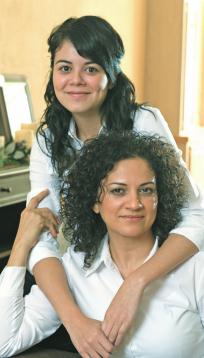





Dr. Williams comes to Shannon
from the Medical Center of South-
eastern Oklahoma in Durant. For more
information, call
325-658-1511.
James Wi l l iams,
MD, family medi-
cine
Dr. Williams
earned a bachelor’s
degree in zoology,
a master’s degree in
endocrinology and
a medical degree
from the University
of Calgary in Can-
ada. He completed
his family medicine residency at Royal
Alexandra Hospital in Alberta.
Dr. Williams is board-certifed in fam-
ily medicine by the American Board of
Family Practice and the College of Family
Physicians of Canada. He comes to Shan-
non from Riverside Medical Center in
Waupaca, Wis.
Dr. Williams’ ofce is at 800 N. Main,
Suite 1, in Big Lake. For more infor-
mation, call
325-481-2183.
Medical Center in Wichita, Kan.
For more information, call
325-658-1511.
Dennis Williams,
MD, anesthesiology
Dr. Williams is a
graduate of Austin
College, where he
earned a bachelor’s
degree in chemis-
try. Dr. Williams
received his medi-
cal degree from
Baylor College of
Medicine in Houston. He completed his
transitional internship at Brooke Army
Medical Center in San Antonio and his
anesthesiology residency at San Antonio
Uniformed Services Health Education
Consortium. He is board-certifed by the
American Board of Anesthesiology.
Dr. Williams was honorably discharged
from the Army in 2005. While in the ser-
vice, he was a fight surgeon and an anes-
thesiologist for the 31st Combat Support
Hospital in Camp Anaconda, Iraq.
Valerie Burgess,
MD , adu l t and
senior medicine
Afer receiving her
bachelor’s degree
in biology from
Schreiner Univer-
sity in Kerrville,
Dr. Burgess earned
her medical degree
from Texas Tech
University Health Sciences Center, where
she also completed her family medicine
residency.
Dr. Burgess’ ofce will be at the Shan-
non Clinic by Sunset Mall, 4235 Southwest
Blvd. For more information, call
325-481-2197.
Stephan Pizzola,
MD, anesthesiology
Dr. Pizzola earned
a bachelor’s degree
in biology at New-
man University in
Wichita, Kan. He
earned his medical
degree at the Uni-
versity of Kansas
School of Medicine
in Kansas City. He completed his anesthe-
siology residency at Via Christi Regional
Shannon’s orthopedic physicians, sports
medicine and outpatient physical therapy
services are now available in one place—
the Shannon Orthopedics Center.
“Te new expansion brings many ben-
efts to our patients, including improved
access to all of the orthopedic surgeons
under one roof and an enhanced sports
medicine facility to provide excellent care
for athletic injuries,” says Caleb Vosburg,
MD, a Shannon Clinic orthopedic surgeon.
Te center provides a comfortable,
easily accessible atmosphere for patients
in the Concho Valley. Te central location
makes patient information easy to access
for physicians and other health care pro-
fessionals. It also eases communication
between departments, giving patients the
best possible care.
Te center ofers treatment for arthri-
tis; spine injuries; and neck, back, foot
and hand disorders. Also available are
joint replacement; arthroscopic surgery;
outpatient physical therapy; and sports
injury evaluation and treatment through
Shannon West Texas Sports Medicine,
located in the center.
Te center is located at Shannon South-
west Clinic, 4450 Sunset Drive. To
learn more, call
325-481-2292.
Dennis
Williams, MD
Valerie
Burgess, MD
Stephan
Pizzola, MD
James
Williams, MD
Shannon
Orthopedics:
Many services,
one center
Welcome,
new providers!
We are proud to ofer the
services of these doctors
Tere is an excellent reason why women
should have Pap tests: Tey save lives.
If you want proof, imagine a graph that
tracks deaths from cervical cancer over the
past 50 years in the U.S. Te line on the
graph goes down, down, down. Cervical
cancer was once a leading cause of cancer
death in women, but deaths dropped by al-
most 70 percent from 1955 to 1992, reports
the American Cancer Society.
Why? Because women started having
Pap tests during that time.
Te test picks up cancer early, when the
chance of a cure is very high. Pap tests also
can spot cells that can become cancerous
over time. Treatment can completely stop
the cancer from forming.
What are Pap tests?
Pap tests, which
also are called Pap smears, are relatively
simple tests. A doctor or other trained
health care provider uses a tool called a
Pap tests can protect women fromcervical cancer
speculum to open the vagina. He or she
uses a small brush or scraper to collect a
small sample of cells from the cervix—the
lower part of the uterus.
Te cells are put on a slide or in liquid
and are sent to a lab to be examined. Re-
sults come back within a few weeks.
During the test, some women do feel
brief discomfort. But for most, the test
is painless. It’s usually done as part of a
pelvic exam.
Who needs a Pap test?
According to
the American College of Obstetricians
and Gynecologists (ACOG), Pap tests
should be part of your preventive health
care routine. Your age and health history
guides how ofen you need a Pap test.
Most women can follow these guidelines
from ACOG:
●
●
If you are 21 to 29:
Have a Pap test
every two years.
●
●
If you are 30 to 64:
Talk to your doc-
tor about how ofen to be tested. You may
only need a Pap test every three years if
you’ve had normal test results at least
three times in a row.
●
●
If you are 65 or older:
Talk to your
doctor about whether to continue being
tested. If you’ve had at least three normal
Pap smears and no abnormal ones in the
last 10 years, you may be able to discon-
tinue the tests.
Women of any age with certain risk
factors may need more frequent Pap tests,
including those who:
●
Have had cervi-
cal cancer.
●
Are HIV-positive.
●
Had a
mother exposed to diethylstilbestrol (DES)
while pregnant.
Schedule yours today
For information
about cervical cancer screenings, call the
Cancer Empowerment & Resource
Center at
325-481-2065.
F A L L 2 0 1 1
7
H E A L T H B E A T
H E A L T H T A L K
N E W S , V I E W S & T I P S